
Mapping Spiritual Innovators: Chicago Convening
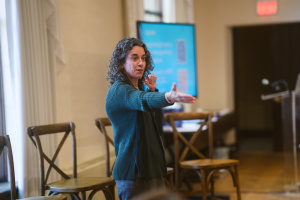 Our project Mapping Spiritual Innovators, supported by a collaborative of organizations invested in this vital work, sought to better understand the “emergent groundswell of next-generation innovative spiritual leaders, with bold and innovative projects, communities, and ventures taking root across the country, categorically redefining the role and experience of faith and spirituality in public life.” One of the methods of that project was to convene those actually doing the work of spiritual innovation, taking time together to explore “the successes and challenges of spiritual innovators in a collaborative, values-driven, generative space of learning, practice and connections.”
To that end, stakeholders in spiritual innovation, including educators, religious leaders, nonprofit leaders and others gathered in Chicago in October 2025. Participants discussed the needs being met by spiritual innovation, the future potential of existing spiritual “ecosystems,” and what challenges exist in nurturing those ecosystems. These fruitful conversations resulted in several observations on the state of spiritual innovation today:
- The need for support for individual innovators, who often feel alone and may not have the capacity to truly “launch” their innovation alone.
- The need for creative field-building mechanisms, without succumbing to some of the dangers implicit in professionalization and credentialization.
- The need to understand and best steward “legacy,” acknowledging the historic stability of institutions and how best to introduce the disruption to them often implied by innovation.
- The need for educators to prepare spiritual leaders to cultivate imagination, acknowledging and sometimes countering a perception of scarcity.
- The need for driven, courageous, and well-resourced leaders who can weather the difficulties of “translating” innovation and reluctance to collaborate with something unknown.
 Going beyond an identification of the needs of innovation and innovators, the group also proposed several avenues to addressing those needs; those interventions might include:
- Initiating further research, expanding beyond the current project.
- Building more support for spiritual innovators.
- Hosting additional in-person conversations, which often directly build support for innovators.
- Providing intentional training for spiritual innovators to help them cultivate local spiritual ecosystems.
- Developing a more visible network of spiritual innovation connectors, which addresses the isolation often felt by innovators.
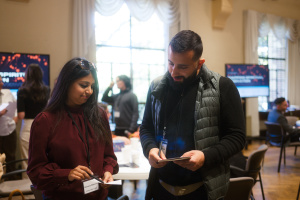 This project, of course, does not exclude anyone from innovation, and we encourage our community to think deeply about spiritual innovation — who is doing it in your community? How are they doing it? What would help them do it better?
Finally, to learn more, visit our page on Mapping Spiritual Innovation.
This post was written with reporting support from Danielle Goldstone (innoFaith) and Sandy Hong (Glean Network). All photos © by Kachi Mozie.