Spiritual Care into The Future: Is There A Consensus?
To verify completion of this webinar viewing, please fill out this brief reflection form. This will verify your viewing of the webinar and return a certificate of completion to you automatically.
Covenantal pluralism, a philosophy that encourages shifting from tolerance of religious diversity to mutual engagement, is desperately needed around the world. The Chaplaincy Innovation Lab has been advancing this idea through its project “Expanding the Reach of Covenantal Pluralism,” with support from Templeton Religion Trust.
Chaplains and spiritual care providers have covenantal pluralism at the core of their professional identities and are key figures in enacting it. Recent research shows that 20% of people in the United States have had contact with a chaplain. In interviews, care recipients emphasize the value they experience in chaplains’ non-judgmental approaches and ability to engage with patience, empathy, and respect across all avenues of difference.
This webinar reports on our work with a broad set of stakeholders on a consensus statement about what chaplaincy and spiritual care is and how it can contribute to individual and institutional wellness in the United States.
We have indexed this webinar to following learning outcomes, which nonetheless should not be construed as endorsement of the event by BCCI or ACPE:
BCCI ITP2: Provide spiritual care that incorporates a working knowledge of an academic discipline that is not explicitly religious / spiritual.
BCCI ITP5: Articulate a conceptual understanding of group dynamics and organizational behavior.
BCCI ITP6: Articulate how primary research and research literature inform the profession of chaplaincy and one’s spiritual care practice.
ACPE Outcome 5 Level IIB: Integrate relevant research into one’s practice of spiritual care.
This project was made possible through the support of grant #TRT-2024-33249 from the Templeton Religion Trust. Templeton Religion Trust (TRT) is a global charitable trust chartered by Sir John Templeton in 1984 with headquarters in Nassau, The Bahamas. TRT has been active since 2012 and supports projects as well as storytelling related to projects seeking to enrich the conversation about religion. Learn more at templetonreligiontrust.org.
Paul Galchutt, MDiv, MPH, BCC, is Assistant Director of Engagement at Transforming Chaplaincy and Assistant Professor in the Department of Religion, Health, and Human Values at Rush University Medical Center.

Mary Glenn is the Associate Professor of the Practice of Chaplaincy and Community Development and Co-Chair of the MA in Chaplaincy degree in the School of Mission and Theology at Fuller Theological Seminary. She has served as a certified chaplain for more than two decades with three different agencies and a law enforcement chaplain trainer throughout the state of California. She currently serves as the first and only chaplain with the LA County District Attorney’s Office/Bureau of Investigation.
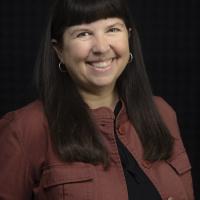
Many years ago, Trace Haythorn and Wendy Cadge started a conversation that led to the birth of the Lab. At the time, he was executive director for ACPE. Today he serves as an executive coach and consultant, bringing 25 years of leadership to service with people and organizations across the US. Out of his love for spiritual care and his deep belief in its potential to heal the world, Trace continues to work with the Lab, Transforming Chaplaincy, the George Washington Institute for Spirituality and Health (GWISH), City of Hope’s ICC program, and the European Research Institute for Chaplains in Healthcare (ERICH).
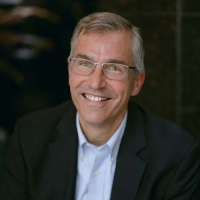
Amy Lawton is Research Manager for the Chaplaincy Innovation Lab. She completed her PhD in sociology at the University of Connecticut. Her research interests focus on the potential and paradox of religious pluralism in the United States, the cultural production of the sacred, and meaning-making in both religious and (non)religious belief systems. Her dissertation examined the practice of donor memorial ceremonies, which are memorial services held by medical schools to commemorate and honor whole-body anatomical donors.