
The Future of American Religion: A Conversation with Robert Wuthnow
Robert Wuthnow on resilience, innovation, and why religion is local
Interview by Feyza Akova
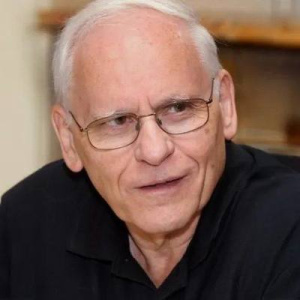 Dr. Robert Wuthnow is Professor of Sociology Emeritus and former director of the Princeton University Center for the Study of Religion. He serves as Senior Advisor on the Spiritual Infrastructure of the Future research team. Postdoctoral Scholar Dr. Feyza Akova sat down with Dr. Wuthnow to hear more about his thoughts on the research project.
This interview has been edited for length and clarity.
Interviewer (SIF): Could you please tell us a little bit about how you became involved with the Spiritual Infrastructure of the Future Project and what your involvement has looked like so far?
Wuthnow: Well, I got involved because Wendy Cadge invited me to tag along and play a small role. Wendy Cadge is someone who I’ve known for a very long time and is a highly respected scholar, as well as the president of Bryn Mawr College. If she thought I could tag along and do anything, I said, “Sure, I’m willing to do that.”
I think there’s value in a big umbrella project like this that has not defined itself from the very start as a survey about individuals, a poll focusing on individuals, because you miss a lot of the ways in which religion is organized and the ways in which spirituality may be happening when you do that. It’s not a project that’s limited to congregations because there are many other ways, centers, and nonprofit groups and so forth that are very important to the religious and spiritual scene today. I’m hopeful.
SIF: This project also connects with some of your earlier work, like The Restructuring of American Religion. How does it connect to that work, or maybe try to extend it?
Wuthnow: Well, The Restructuring of American Religion was a book published in 1988. What was happening then, the restructuring that was happening, was that increasingly Americans were defining themselves either as religious conservatives or religious liberals or something in between. They might be Presbyterians, but they thought of themselves as conservative Presbyterians or liberal or progressive Presbyterians. The same with Jews, the same with Catholics. Why was that happening? There were surveys at the time that showed that it really was happening. One reason was that the 1980s were still being very much influenced by what had happened in the 1960s and ’70s, namely the Civil Rights Movement and the Vietnam War, which included, of course, the anti-war movement.
Both of those had divided religious people and Americans more broadly between the left and the right. A second thing that was happening was that denominational identities were already beginning to fade such that, for example, when we did a big project in Dallas, we found that there would be a church that was Baptist, but it didn’t advertise itself as Baptist, or Methodist, but it didn’t advertise itself as Methodist. It got along with other Methodists or other Baptists or whoever it might be. There were also more activities happening among Protestants and Catholics and even among Christians and Jews. That was making a difference.
In the 1970s and ’80s, scholars were very interested in new religious movements. Transcendental meditation, yoga, other kinds of meditation practices, Eastern religions, radical Christian groups. New religious movements were the name of the game in those days. Well, nowadays we say, “Okay, there’s something going on now.” Is it continuous with those earlier new religious movements? Is it different? Has the diversity of American religion expanded? Certainly, we know that it has, in terms of larger numbers of Muslims in the United States, larger numbers of Hindus in the United States, various other groups, Buddhists, among others.
American religion is more diverse than it was. I think that’s one reason to say, yes, we need to look again, not just pay attention to some of those things that were happening in the 1980s after all. Now, 40 or almost 50 years later, what do we see happening as the main trends in American religion?
“The numbers may be smaller, but if you go around and visit mosques and synagogues and churches, you find a lot of activity.”
Robert Wuthnow, Professor of Sociology Emeritus, Princeton University
SIF: How do you see some of those patterns becoming intensified in the current context? What other things are new, beyond diversity?
Wuthnow: To me, the thing that has intensified the most has been the percentage of people, especially younger adults, who say they are not religiously affiliated and are not involved in religious worship services. I’m glad you used the word intensified because that’s exactly how I see it. It’s not new in the sense that those of us who were studying American religion in the ’80s and since then saw that kind of thing was happening. One of my very first publications, in fact, was showing the cohort differences between younger people and older people in terms of religious involvement.
I would say another, again, apart from just diversity and all of that, is the surprising resilience of religious organizations. The numbers may be smaller, but if you go around and visit mosques and synagogues and churches, you find a lot of activity. It’s worship, it’s prayer, it’s helping families in times of need, it’s working with people in the community who need help. It’s also finding new ways to attract some people. In some of the cases I was studying, the attraction for young people was having something to do, feeling meaningful, feeling that they could get involved and therefore do something to help other people or help out their community.
I think resilience is something that isn’t easily captured in public opinion polls, but it needs to be looked at. Then innovation is the other one, of course. There, I think what we see is that, as many people have pointed out, there’s an entrepreneurial spirit in American culture and therefore in American religion where somebody, especially, let’s say, a young person who feels a call to be a pastor or a priest or whatever decides, “I don’t want to just do the same old, same old. I want to try something new.”
SIF: You mentioned trends like religious disaffiliation, the resilience of religious organizations, and innovation. Where does this leave you, this picture? Are you hopeful about the future of religion in the US? Are you ambivalent? Are you pessimistic?
Wuthnow: I’m hopeful about it. I guess I should always say I’m cautiously hopeful or cautiously optimistic. When I see headlines about American religion just declining and becoming nothing, or American religion becoming like European religion, if they mean by that that European countries often are more secular. No, I think American religion is so much a part of the tradition of our country. It may not always be called religion. It may be what some people are calling civic religion or civil religion, in that it’s part of the warp and woof of how we think of ourselves as citizens.
My guess is, judging from the media, newspapers, television, and so forth, that there is a sense out there that American religion can be understood through the latest survey results. People may think that American religion is declining. Why do they think so? Because a survey said it was.
I think it’s also misleading that so much about religion these days is about politics. Of course, that’s important. After all, religion and spirituality are about so much more than that. It is very difficult for anyone, academics and non-academics, to understand what goes on in the hearts of people.
“People may think that American religion is declining. Why do they think so? Because a survey said it was.”
Robert Wuthnow
SIF: On that point, do you think there are aspects of contemporary American religious lives that scholars haven’t yet fully understood or explained?
Wuthnow: I am impressed by the amount of scholarship that is being done. Since the time that I started being interested in studying religion, the number of scholars studying religion has increased. The number of scholars who study other things, but understand that religion is important, is increasing. There has also been an increase, I think, in the kinds of studies, let’s say. There was a point, maybe 40, 50 years ago, when religious studies departments hardly existed. Now, any major university feels that it’s important to have a religious studies department. Those are doing historical work and contemporary work. A lot of sociology work is being done.
I also think that, especially because religion and spirituality are as complicated as they are, we scholars haven’t begun to scratch the surface of what’s going on.
In my own research, I have come to focus much more on what’s called practice theory or social practice theory that focuses on the settings, the situations, and the social interaction, and the cues, and the constraints, and the predispositions, and habits, all of which go into making things happen as they do in various situations and then change over time or continue over time.
“Just like politics is local, religion is local.”
Robert Wuthnow
SIF: Do you see this spiritual infrastructure project addressing some of these tendencies and gaps?
Wuthnow: Yes, I do. I think the in-depth projects that are now starting in some cases, or being commissioned or being identified, will do that. Since the focus of this project is on these four cities, Boston, Chicago, Los Angeles, Oklahoma City, that gives some focus. It allows the researchers in those four communities to ask community leaders, religious leaders, and other stakeholders in the community, “What’s going on in your city? Tell us about it so that we’re not just relying on some national data, but we know something about what’s going on.” You can imagine that what’s going on in Oklahoma City might be quite different than what’s going on in Boston. That’s important. Then, within those four locations, then as individual researchers or research teams burrow in and decide to look at a group that may be innovative because it’s doing something innovative in a Jewish context or in a Muslim context or because it’s a meditation center or a Sufi group, whatever it might be, that will illuminate a lot of the things that we just haven’t looked at yet, let alone understood very well.
SIF: Do you think the findings of this project could matter beyond academia, like for religious leaders, communities, or the religious institutions themselves?
Wuthnow: I hope so. The reason I’m hopeful about that is, again, because of the focus of the project on four cities, four geographic locations, because we know that just like politics is local, religion is local. When I talk to religious leaders, they are interested much more in what’s happening local to their neighborhood, to their community, to their congregation, whatever it may be, to their constituency, than they are broader trends.
The more we have focused on generalizations, not just in studies of religion, but in the social sciences more broadly, the more we are finding that it doesn’t make sense to do that. Why? Because situations matter. Some of the best theoretical work has focused on contingency rather than generalizations.
SIF: If you could travel into the future of religion in the United States, what would you be most curious to see or understand?
Wuthnow: I would be most curious, most deeply concerned beyond curiosity, to know: is American democracy thriving or not? As far as religion is concerned, did religion help it to survive, or did it help bring down American democracy? My concern is always broader than just what’s happening in religion. I’ve been, as I said earlier, very concerned about what’s happening in American democracy. I see a number of threats of authoritarianism happening right now that are worrisome. I see some religious elements just simply riding along, and others saying, “No, wait, we have to stand back and oppose what’s going on and support democracy.”
I am hopeful right at the moment. As you say, there’s a great deal of uncertainty. We are recording this within a week of a major midterm election happening that might bring hope, or it might not. I am hopeful.
Dr. Feyza Akova is a Postdoctoral Scholar with the Spiritual Infrastructure of the Future project.