
Spiritual Care and Mental Health: What Every Chaplain Should Know
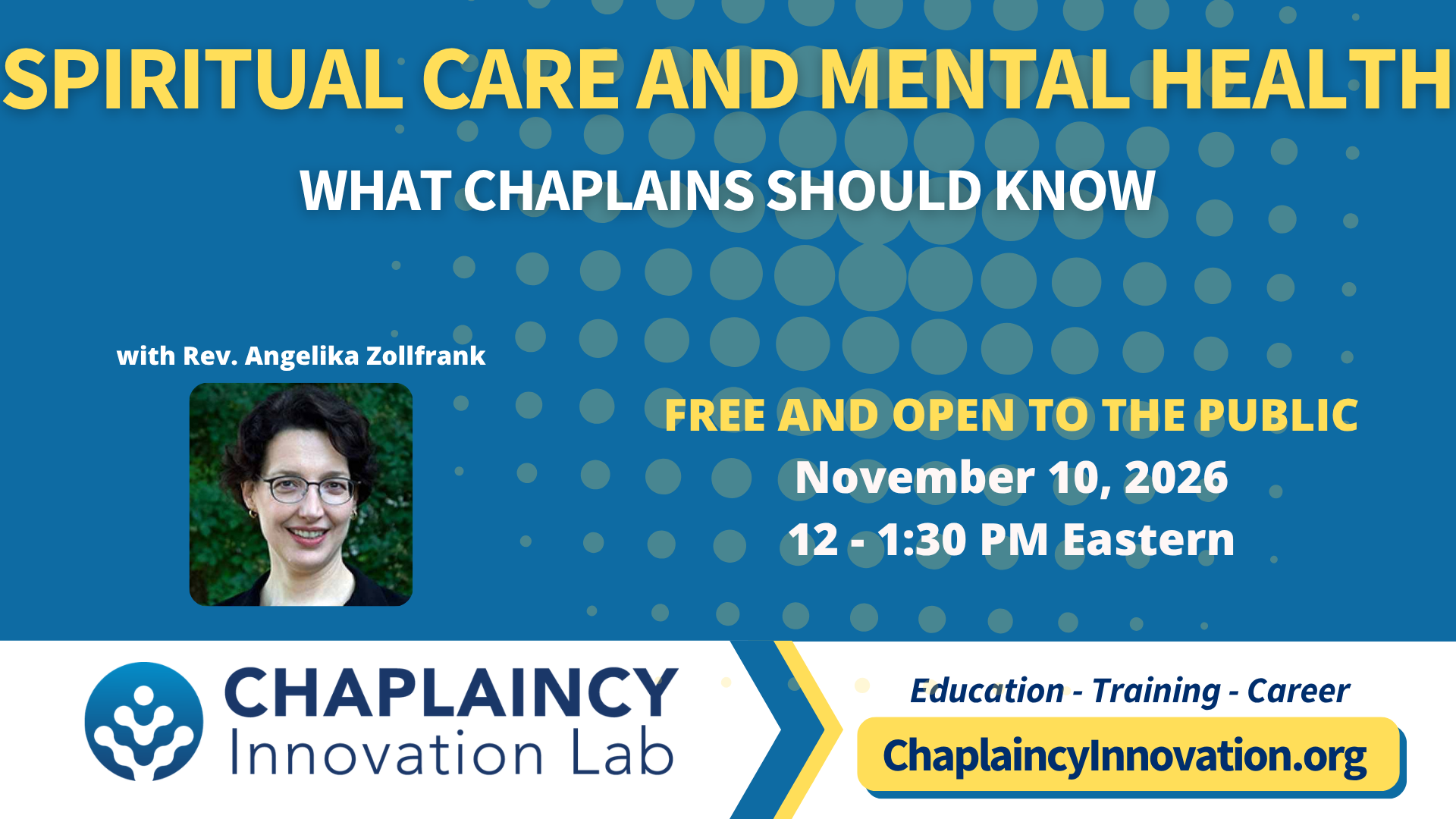
This lecture will launch the Chaplaincy Innovation Lab’s short course in mental health chaplaincy, and will be of interest both to chaplains who may currently serve patients with diagnosed or undiagnosed mental health comorbidities, and chaplains interested in serving in more intensive mental health contexts.
Rev. Zollfrank will cover topics including, but not limited to:
- Mental health versus spiritual health: what is the difference and how are they related?
- Understanding the difference between everyday anxiety, temporary depressive experiences, and long-term mental health diagnoses
- Inpatient versus outpatient mental health care, and chaplaincy therein
- Making referrals for mental health care
- How to be expansive and adaptable in caring for those experiencing psychosis.
Learning Outcomes
We have indexed this webinar to the following ACPE and BCCI outcomes and competencies. Our proposed learning outcomes should not be construed as endorsement of this webinar by either ACPE: The Standard for Spiritual Care and Education or BCCI, Inc.
ACPE — B3: Demonstrate intercultural and interreligious humility
ACPE — E4: Demonstrate teamwork and collaboration across disciplines
BCCI — ITP3: Incorporate spiritual and emotional dimensions of human development
BCCI — PPS3: Provide spiritual care respecting diversity
Our Presenter
Rev. Angelika A. Zollfrank is director of Clinical Pastoral Education within the Spirituality & Mental Health Program at McLean Hospital. She provides spiritual guidance and insight for DigitalSoul and SPIRIT projects and serves as a liaison between the research team and the clinical staff at McLean. Angelika is a pastor in the ELCA, board certified by APC, a Certified Educator with ACPE, and has over two decades of experience in chaplaincy and Clinical Pastoral Education. She completed her chaplaincy training at Memorial Sloan Kettering Cancer Center in New York City, Yale New Haven Hospital in New Haven, Connecticut, and Massachusetts General Hospital in Boston, Massachusetts.